



A portable split system air conditioner is an innovative cooling solution that divides the air conditioning process into two distinct, connected units: one placed indoors and the other outdoors.
2026 Portable Split System Air Conditioner: Ultimate Buying Guide
JUL 01, 2026
Last updated: JUL 22, 2026


524 views , 3 mins read
Summer is great until your living room turns into a sauna. Traditional window units block your view and central air costs a fortune.

Thankfully, there is a genius middle ground. If you want efficient, whisper-quiet cooling that moves with you, a portable split system air conditioner is a good solution.
In this guide, we break down how an air conditioner portable split works, compare it to other models, and help you choose the best portable split system air conditioner to keep your home comfortable all summer long.

In this article
1. What is a Portable Split System Air Conditioner and How Does It Work?
2. Portable Split System Air Conditioner vs. Other Types of Air Conditioners, What's the Difference?
3. How to Choose the Best Portable Split System Air Conditioner?
4. Portable Split System vs. Standard Portable AC: Which is Right for You?
5. Frequently Asked Questions
What is a Portable Split System Air Conditioner and How Does It Work?
The indoor unit contains a quiet fan and an evaporator coil, while the outdoor unit houses the noisy compressor and condenser. These two halves are linked by a flat, flexible refrigerant line that easily passes through a small gap in a window or door.

It works by drawing warm indoor air across the cold evaporator coil, which absorbs the heat. The refrigerant carries this captured heat through the connecting line to the outdoor unit. There, the compressor compresses the refrigerant, dumps the heat into the outside air, and sends the cooled liquid back inside to repeat the cycle. This split design delivers the whisper-quiet efficiency of a permanent mini-split without requiring professional installation or permanent wall modifications.
Portable Split System Air Conditioner vs. Other Types of Air Conditioners, What's the Difference?
To help users objectively distinguish different cooling solutions, we break down four common air conditioner types with standalone pros, cons, and ideal user groups.
1. Portable Split System Air Conditioner
Pros
- Ultra-quiet indoor operation with the compressor placed outdoors.
- Fully movable with no wall drilling or permanent damage.
- Higher energy efficiency than traditional portable units; supports flexible room-to-room relocation.
- Renter-friendly and easy to disassemble for moving.
Cons
- Higher upfront cost than standard portable AC and window AC
- Requires placing two separate units indoors and outdoors, taking up scattered space.
- Ideal for: Renters, frequent movers, bedroom users who prioritize low noise, and households pursuing balanced cooling efficiency and flexibility.
2. Standard Portable Air Conditioner
Pros
- Lowest purchase price among all types.
- Complete plug-and-play setup with no installation tools required.
- Single compact body with full portability for temporary space adjustment.
Cons
- Loud indoor operating noise due to built-in compressor
- Low energy efficiency leading to higher long-term electricity bills
- Negative pressure easily draws in outdoor hot air, weakening cooling effect.
- Ideal for: Budget-limited users, temporary seasonal cooling, garages, workshops, and non-silent priority spaces.
3. Window Air Conditioner
Pros
- Affordable pricing with stable and concentrated cooling performance
- Simple installation and low maintenance difficulty
- Reliable cooling output for fixed single rooms.
Cons
- Occupies window space and blocks natural light and ventilation.
- Prohibited by most apartment rental agreements.
- Non-portable and fixed for single-room use.
- Moderate indoor noise.
- Ideal for: Long-term homeowners with fixed living spaces and loose housing management rules, who prioritize cost performance over aesthetics and mobility.
4. Permanent Mini-Split Air Conditioner
Pros
- The highest energy efficiency and lowest indoor noise level.
- Stable long-term cooling and dehumidification.
- durable service life and uniform room temperature distribution.
Cons
- Requires professional licensed installation with high labor costs.
- Causes irreversible wall drilling damage.
- Completely non-movable and unsuitable for temporary housing.
- Ideal for: Long-term property owners, family whole-house cooling, and users who focus on long-term energy savings and comfort.
| Feature | Portable Split System AC | Standard Portable AC | Window AC | Permanent Mini-Split |
|---|---|---|---|---|
| Indoor Noise | 34–40 dB (ultra-quiet) | 50–62 dB (loud) | 46–55 dB (moderate noise) | 28–38 dB (quietest) |
| Installation | Full DIY, no drilling | Plug-and-play | Semi-DIY, window occupation | Professional installation only |
| Portability | Fully movable | Fully movable | Non-movable | Fixed installation |
| Wall/Window Damage | Zero damage | Zero damage | Minor window wear | Permanent wall damage |
| Core Pros | Quiet, efficient, renter-friendly, movable. | Lowest cost, easiest setup | Stable cooling, cost-effective | Energy-saving, ultra-quiet, durable |
| Core Cons | Slightly high upfront price. | Noisy, high power consumption | Blocks window, lease-restricted | High installation cost, non-removable |
| Best For | Renters, frequent movers, quiet cooling seekers. | Temporary use, tight-budget users, non-residential spaces. | Permanent residents with loose housing rules | Long-term homeowners, whole-house cooling |
How to Choose the Best Portable Split System Air Conditioner?
Shopping for portable split air conditioner feels overwhelming with dozens of BTU sizes, inverter options, and extra features.
Step 1: Match BTU Capacity to Your Room Size
Portable air conditioner split system cooling power uses standard DOE SACC BTU measurements, as a general rule:
- 8,000 BTU portable split system air conditioner: Rooms under 250 sq ft (small studio, home office).
- 10,000 BTU portable split air conditioner: 250–400 sq ft (standard single bedroom).
- 12,000–14,000 BTU split portable air conditioner: 400–600 sq ft (open-concept living rooms).
Skip overbuying oversized units—they cycle on/off too quickly, fail to remove humidity, and waste electricity monthly.
Step 2: Prioritise Inverter Compressor Models
Inverter portable split system air conditioner adjusts cooling output continuously instead of full-power on/off bursts. Business Research Insights data shows inverter air conditioner portable split cuts monthly energy use by 22–28% compared to fixed-speed non-inverter portable split air conditioner, critical in regions with 3+ months of hot summer weather.
Step 3: Check Hose Length & Window Compatibility
Measure the maximum distance between your indoor unit placement and window before purchasing. Most budget portable split air conditioner include 3m refrigerant tubes; larger spaces need extension tube kits sold separately. Look for universal window seal inserts that fit sliding, casement, and double-hung windows—cheap split portable air conditioner often skip versatile seal accessories, leading to hot air leakage and dropped cooling performance.
Step 4: Select Must-Have Extra Functions
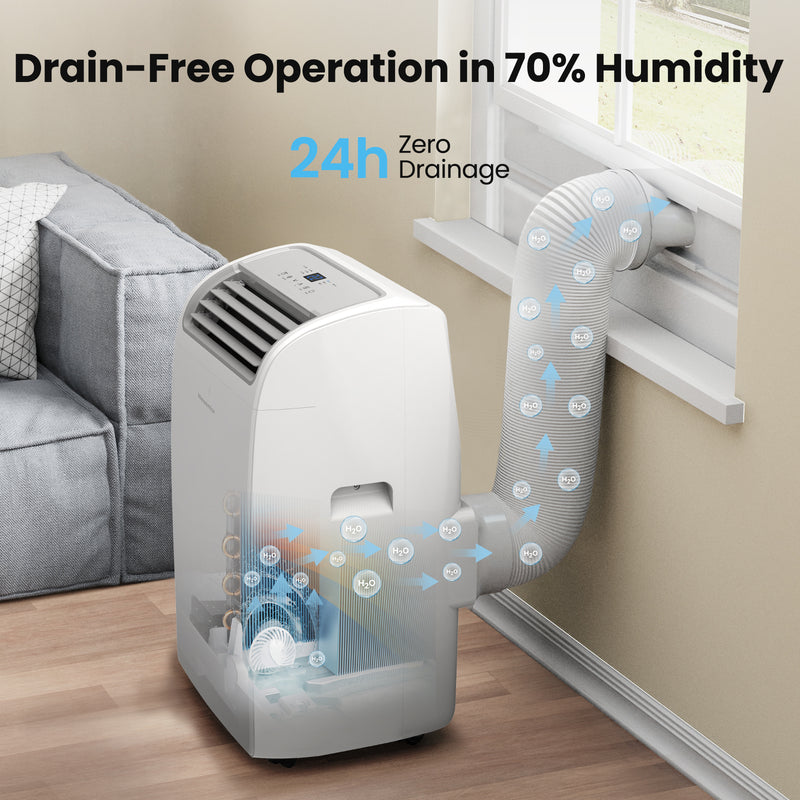
For year-round comfort, pick a portable split system air conditioner with built-in heat pump mode for mild winter heating. Self-evaporating condensate removal eliminates daily draining, while Wi-Fi smart control lets you adjust temperature remotely from phones—top features.
Step 5: Verify Warranty & Noise Ratings
Always confirm indoor noise sits below 42 dB for bedroom use. Reputable portable split system air conditioner brands offer 2–3-year compressor warranties; generic no-name split portable air conditioners often carry only 1-year limited coverage with no local service support.
Portable Split System vs. Standard Portable AC: Which is Right for You?
When choosing between a portable split air conditioner and a standard single-hose portable AC, it comes down to balancing installation flexibility against efficiency and noise.
- Efficiency: A split portable air conditioner separates the indoor fan from the outdoor compressor. Because the outdoor unit has its own air loop, it avoids the "negative air pressure" common in standard units, which can pull warm air back into the room.
- Noise Level: Since the heavy compressor of an air conditioner portable split sits outside, indoor noise is minimal (35–45 dB). Standard portables house the compressor inside, operating at a louder 55–65 dB.
- Placement: Split systems require an exterior balcony or ledge for the outdoor unit. Standard portables only need a window to vent a hose, making them highly versatile.
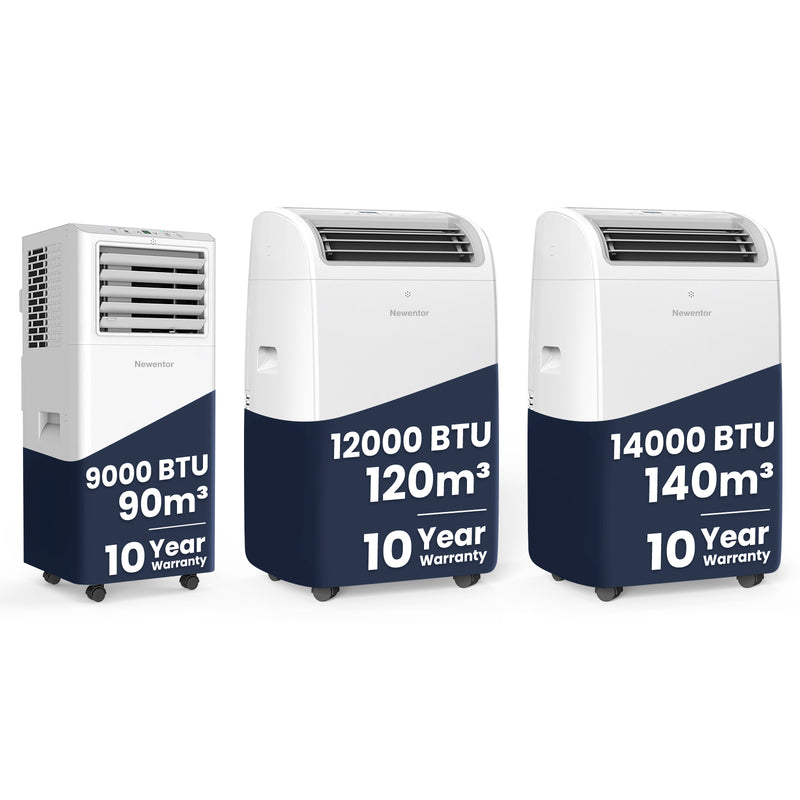
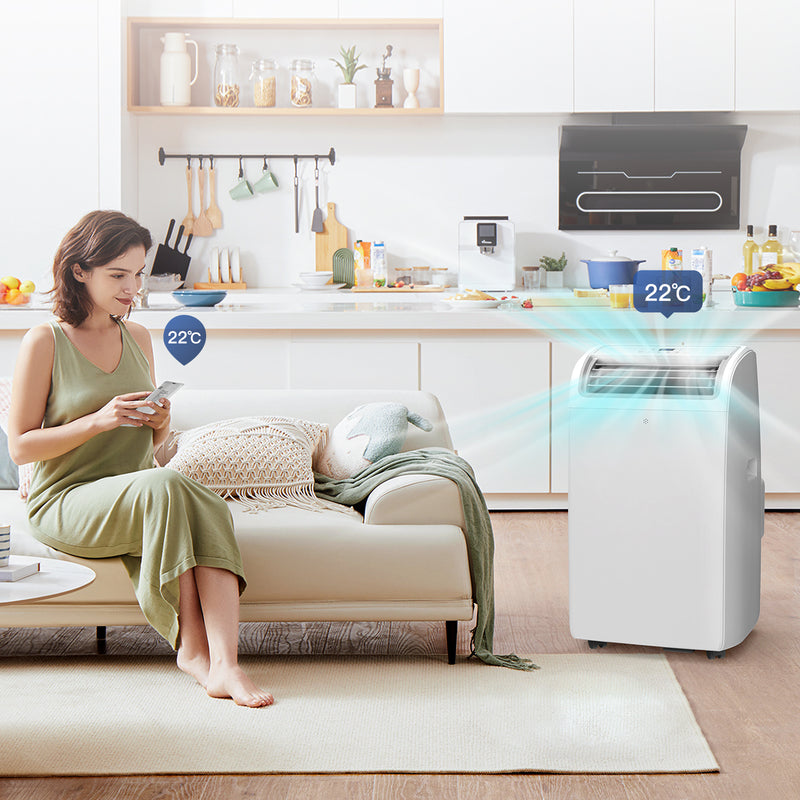
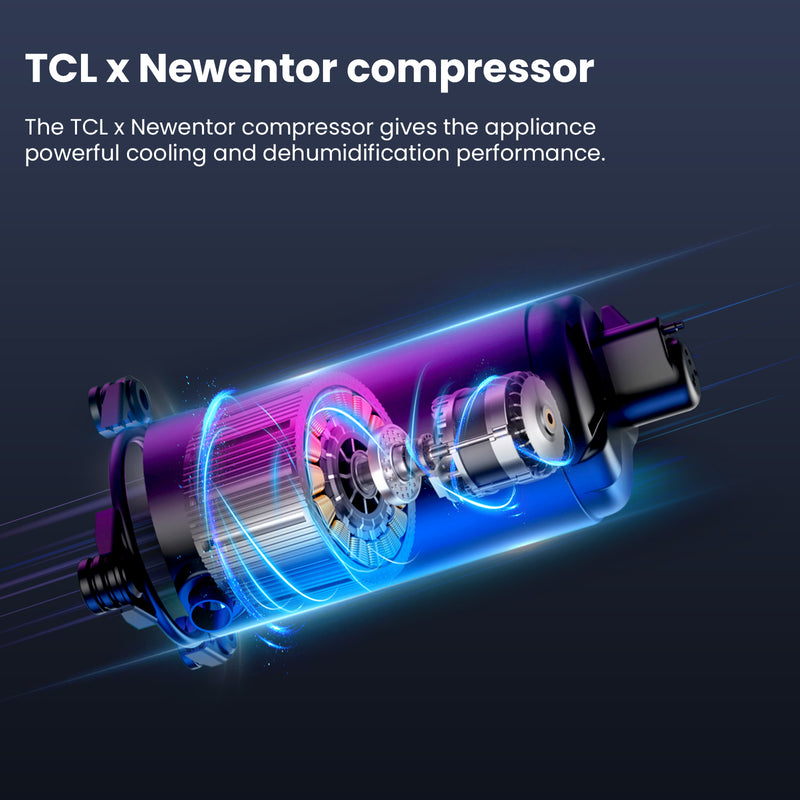
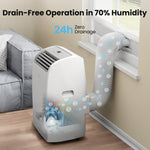
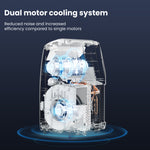
If exterior space limitations prevent you from using a full portable air conditioner split system, a high-performance single-unit alternative like the Newentor Portable AC bridges the gap. Engineered with advanced acoustic insulation and a dual-motor setup, it delivers up to 14,000 BTU of cooling at a whisper-quiet 54 dB, offering an ideal plug-and-play solution.

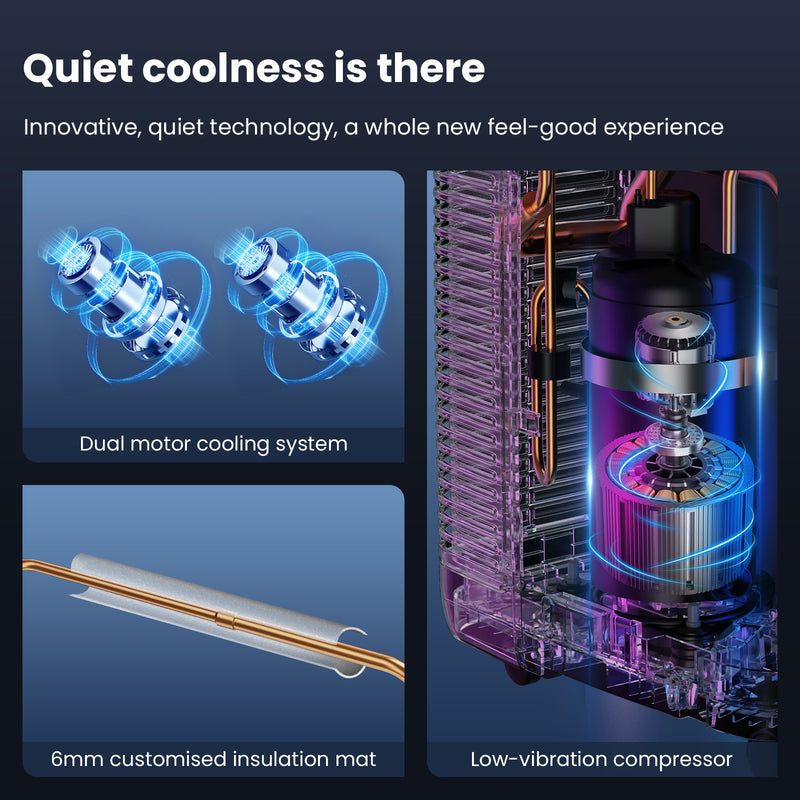
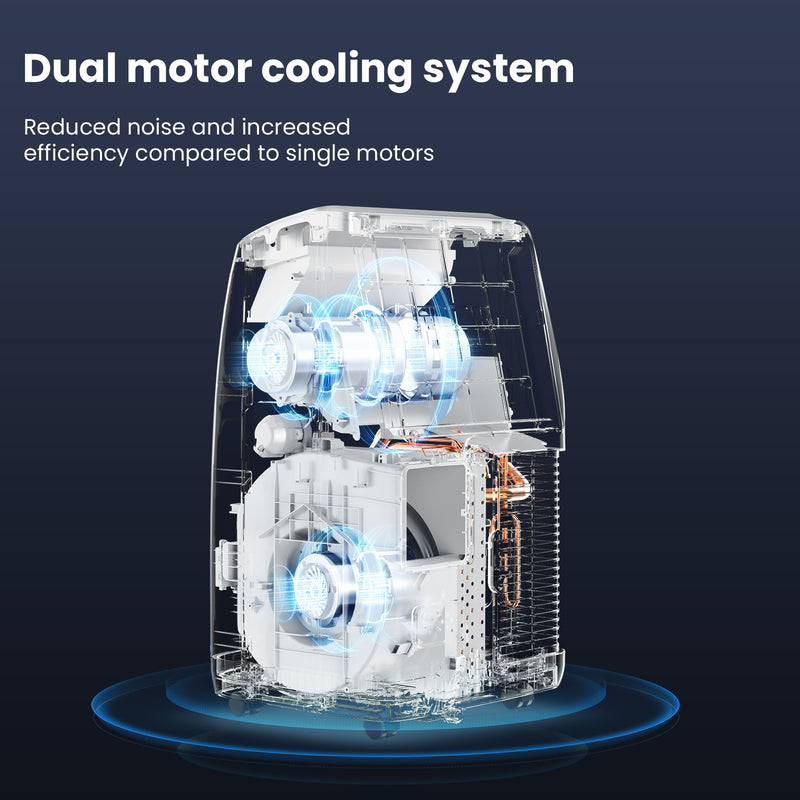
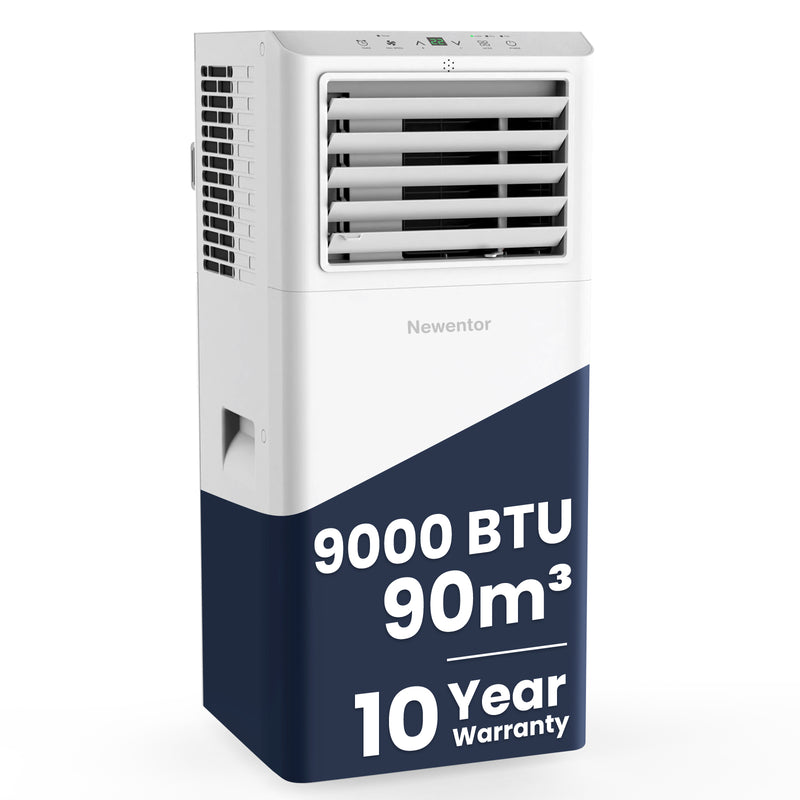





Newentor Portable Air Conditioner
$560.00
$700.00
Save
$140.00
Out of Stock
- 30-day free replacement for quality issues.
- 10-Year Warranty.
- Fast cooling and quiet operation.
- Quick installation for ease of use.
Frequently Asked Questions
1. How do I manage the gap in the window or door where the cord passes?
Most units come with a specialized window sealing kit or a slim, flat connection ribbon designed to fit through tightly closed windows or doors. This keeps outside air and pests from entering the room.
2. Can the outdoor unit be left in the rain?
Yes, the outdoor unit is built to be weather-resistant and withstand typical outdoor conditions like rain and sun. However, it should never be submerged in water, and it is best practice to protect it from extreme weather when not in use.
3. Can I move portable split air conditioner between floors of my home?
Yes, but note both indoor and outdoor units have rolling casters. For multi-story homes, you will need to carry the lightweight outdoor condenser downstairs or upstairs to place it outside the target room’s window—no permanent pipe routing locks the unit to one room.
Leave a comment