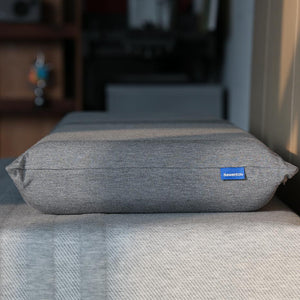
What is Memory Foam?2026 Guide

Home > All Artcles >
What is Memory Foam?2026 Guide

You’ve likely heard of memory foam—it’s everywhere, from mattresses to pillows, loved for that one-of-a-kind "hug" that levels up your comfort.


Ever pressed your hand deep into the foam and watched, fascinated, as it slowly rises back to its original shape? If you’ve wondered about the science behind that magic, you’re in the right place.


memory foam

In this guide, we’ll dive into everything you need to know about memory foam—what it is, how it works, and the pros and cons of making it part of your sleep routine. Keep reading to learn more!

In this article

1

What is Memory Foam?

So, what is memory foam? At its core, this innovative, high-density material is designed to mold to your body’s unique shape in response to heat and pressure, effectively distributing your weight.


Once you get up, the material slowly returns to its original form—hence the name "memory" foam. This slow recovery is what creates that signature "sinking" feeling people love.


Interestingly, this staple has out-of-this-world origins. NASA commissioned it in 1966 to improve aircraft cushion safety and relieve the extreme pressure astronauts faced during high-G liftoffs and landings.


It wasn't until the early 1990s that this space-age technology finally moved from the cockpit to the bedroom, officially making its way into consumer mattresses and changing the sleep industry forever.

newentor adjustable bed memory foam mattress
2

What is Memory Foam Made of?

If you’ve ever wondered what is memory foam made of, the secret lies in a clever chemical cocktail. At its base, memory foam is crafted from polyurethane, but manufacturers add specific compounds to give it that signature "slow-melt" and "rebound" effect. These tweaks are what make the foam both viscous (slow to react) and elastic (able to spring back).


Most memory foams are born from a precise mix of polyols, isocyanates, and water. When these ingredients react, they expand into an "open-cell" structure—a microscopic web of air pockets that makes the foam soft, breathable, and springy.

what are memory foam made of

However, not all foams are created equal. Every brand has its own "secret sauce" in the manufacturing process, which ultimately determines the quality and feel of your sleep surface:

  • Eco-conscious brands: These manufacturers often swap a portion of petroleum-derived polyols for natural plant-based oils, reducing chemical odors and environmental impact.
  • Traditional brands: These companies typically stick to high-performance, petroleum-derived blends to achieve that classic, deep-contouring viscoelastic feel.

These "trade secrets" in the chemical recipe directly influence how the mattress supports your body. Even a tiny adjustment in the formula can significantly shift the performance:

  • Higher Density: This feels firmer, offers more deep-tissue support, and provides a slower, more luxurious "sink" that lasts for years.
  • Lower Density: This feels softer and more cloud-like, responding faster to your movements while often offering better initial breathability.

This is exactly why one memory foam bed might feel like a cool, supportive cloud, while another feels like a warm, deep hug. The chemistry might be complex, but the takeaway is simple: the ingredients matter.

3

How Does Memory Foam Work?

If you’re asking what is memory foam doing under your weight, the answer is a mix of chemistry and physics.


Memory foam is "viscoelastic." That’s a fancy way of saying it acts like both a liquid and a solid. When you apply pressure and heat (like your body sitting on a mattress), the foam’s internal structure shifts. It doesn’t just "squish" like a regular kitchen sponge; it flows.

how does memory foam work

Heat Sensitivity

Memory foam is uniquely designed to react to your body temperature. In a cold room, a memory foam pillow might feel as hard as a brick until it begins to warm up.

As soon as your head hits the surface, your body heat softens the polymers. This allows the material to "melt" exactly where you need it, creating a custom mold of your neck and shoulders.


The "Air Escape" Act

Think of memory foam as a million tiny open-ended bubbles. When you lie down, the air inside these cells is compressed and pushed into neighbouring cells.

This is why the foam doesn't push back against you like a spring mattress. Instead, it absorbs your energy and eliminates the typical resistance of traditional beds.


The Slow Return

Once you get up, those tiny bubbles slowly suck the air back in to regain their structure. This is what creates that famous "handprint" effect for a few seconds.

This slow recovery ensures the surface turns perfectly smooth again, ready to re-contour to your body the next time you decide to lay down.

4

What is Memory Foam Typically Used for?

While it’s the star of the bedroom, memory foam is a bit of a shape-shifting celebrity. Beyond mattresses and pillows, where it provides that iconic "body hug" and pressure relief, you’ll find it working hard in several other spots:


  • Footwear: Many modern sneakers use memory foam insoles, making it feel like you're walking on clouds even during long shifts.
  • The Office: Ergonomic chair cushions and lumbar supports use it to keep your spine aligned during 9-to-5 marathons.
  • Travel: Those U-shaped neck pillows that make economy class bearable? They are almost always made of memory foam.
  • Medical & Safety: It’s used in hospital beds to prevent pressure sores and inside sports helmets or car seats to absorb high-impact energy.

Essentially, if an object needs to contour to your body while effectively absorbing shock, memory foam is the secret ingredient that makes it possible.

high density foam
5

What are the Pros and Cons of Memory Foam?

Deciding whether to switch to a memory foam mattress is a bit like choosing a favorite pair of jeans—what feels like a perfect fit for one person might feel a bit too restrictive for another.


While we’ve covered what is memory foam and the science behind its "hug," it’s important to look at the real-world trade-offs.

Pros

  • Presssure Relief: If you wake up with sore hips or shoulders, memory foam is your best friend. Because it contours to your specific shape, it eliminates the "push-back" you get from traditional springs.
  • Zero Motion Transfer: This is a game-changer for couples. If your partner gets up at 3:00 AM for a glass of water, you won’t feel a thing. The foam absorbs energy rather than letting it bounce across the bed.
  • Hypoallergenic Properties: Because of what is memory foam made of—a dense, polyurethane structure—it’s much harder for dust mites and allergens to settle inside compared to an innerspring mattress.

Cons

  • Heat Retention: Traditional foam is a notorious heat-trapper. If you’re a "hot sleeper," you’ll want to look for gel-infused or open-cell options to stay cool.
  • The "Off-Gassing" Smell: When you first unbox a new mattress, you might notice a chemical odor. People often ask, is memory foam toxic because of this smell? While it’s generally just harmless VOCs escaping (off-gassing), it can be off-putting for a few days.

6

Types of Memory Foam

Because memory foam is used in everything from sneakers to space-age mattresses, manufacturers have developed different "flavors" to suit various needs. When asking what is memory foam, you’ll find it’s no longer just a one-size-fits-all material.

1. Traditional memory foam

This is the "OG" of the industry, famous for that deep, classic "sink-in" hug. It’s the gold standard for pressure relief, but it’s not for everyone.

If you live in a warmer climate or tend to sleep hot, you might find it a bit stuffy, as the dense structure tends to trap and store body heat throughout the night.


2. Plant-based foam

If you're environmentally conscious or wondering is memory foam toxic, plant-based foam is a fantastic alternative. It replaces a portion of the petroleum with botanical oils, offering a faster "snap-back" and fewer chemical odors.

3. Gel memory foam

To solve the heat trap issue, manufacturers developed gel-infused versions. By swirling cooling liquid gel or tiny gel beads into the mix, the foam acts like a thermal conductor.


It pulls heat away from your skin, ensuring you stay chill even when the humidity spikes. It is a fantastic choice for hot sleepers, though you should expect a slightly higher price tag for this advanced cooling technology.

Morpheus Pillow - gel cooling properties

4. Open-cell memory foam

Think of this as the "breathable" version. Unlike traditional dense foams, the internal structure of open-cell foam is full of tiny interconnected tunnels.


This design allows air to circulate freely every time you move, making it a top choice for anyone who wants the support of memory foam without the sweaty wake-up call.

5. Hybrid memory foam mattress

To offer the best of both worlds—comfort and support—many mattress manufacturers now combine independent pocket springs with memory foam. In these designs, the memory foam acts as a plush top layer, providing that signature body-contouring "hug" and immediate comfort. Meanwhile, the pocket springs serve as the heavy-duty support core, offering better bounce, stability, and long-term durability.

7 zone hybrid mattress pro

As mattress technology has evolved, these hybrid models have become increasingly sophisticated. Many now feature "zoned support," which targets different areas of the body with varying levels of firmness. This makes them an exceptional choice for those suffering from back pain, as it ensures the spine stays aligned while the joints are perfectly cushioned.

Also Read
7

How to Choose the Right Memory Foam Mattress?

Finding the right mattress isn’t difficult; the key is to consider these essential factors:

1. Consider Your Sleep Position

Side sleepers generally need a softer memory foam to cushion their shoulders and hips. Back and stomach sleepers require a firmer density to keep their spine from sinking too deeply and bowing out of alignment.

2. Firmness

Finding the right mattress often comes down to one word: Firmness. This determines whether you’ll wake up feeling refreshed or like you’ve been sleeping on a park bench.


Most memory foam beds are rated on a simple 1–10 scale, but the "perfect" feel depends entirely on your primary sleep position and personal comfort preference.


To get a bit more technical, pros often look at ILD (Indentation Load Deflection). This is a specific measurement of how much pressure is required to compress the foam by 25%.


Essentially, the higher the ILD number, the firmer and more supportive the foam will feel. Higher numbers mean the material is more resistant to pressure, keeping you on top of the mattress rather than sinking in.

Firmness Level Feel Best For... Typical ILD Range
1–3 Soft Side sleepers who need deep cushioning for shoulders and hips. 10–15
4–6 Medium Back sleepers or "combo" sleepers who move around a lot. 16–25
7–10 Firm Stomach sleepers or those who prefer a solid, "on top of the bed" feel. 26+

3. Look for Cooling Tech

If you frequently wake up sweating, skip the traditional foam. Opt for copper-infused, gel-infused, or breathable open-cell memory foam to keep the night sweats at bay.

4. Density

The density of memory foam is a major factor that dictates both the comfort and the long-term durability of a mattress. Generally speaking, the relationship between density and feel follows a simple rule:

  • Higher Density: This creates a firmer surface with superior support and a slower, more luxurious "sink." It is also significantly more durable and less likely to sag over time.
  • Lower Density: This results in a softer, more cloud-like feel. It responds quickly to movement, providing immediate comfort, though it may have a shorter lifespan.

To achieve the perfect balance, high-quality mattresses typically feature a multi-layer construction. Manufacturers stack different densities of memory foam—using softer layers on top for pressure relief and high-density foam at the base for structural integrity.

This layering technique ensures the overall mattress falls within the medium-to-high density range, offering the ideal blend of cozy comfort, reliable support, and years of durability.

5. Thickness

The height of your mattress plays a significant role in how much support and deep compression relief you’ll feel. Generally, a thicker mattress offers more layers of comfort and a sturdier base.

If you’re unsure which height fits your bed frame or your body type, be sure to check out our detailed Mattress Thickness Guide to find your perfect match.

6. Safety Certifications

When shopping, always look for reputable certifications that prove a mattress meets strict safety and environmental standards. These aren't just labels; they are your guarantee of a healthier sleep environment. Key badges to look for include:


  • CertiPUR-US®: This is the gold standard for foam. It ensures the material is made without formaldehyde, heavy metals (like mercury or lead), or ozone depleters. It also guarantees low VOC (Volatile Organic Compound) emissions for indoor air quality.
  • OEKO-TEX®: This certification confirms that every component of the product—from the fabric cover to the threads—is free from harmful substances that could pose a risk to your health.

These badges provide essential peace of mind, especially for those who are sensitive to "new mattress" smells, struggle with allergies, or are setting up a nursery for children.

Also Read
8

FAQs

1. Is memory foam toxic?

While the chemical smell of a new mattress (off-gassing) can be unpleasant, high-quality memory foam is not toxic. By choosing products with CertiPUR-US® or OEKO-TEX® certifications, you can be certain your bed is free from dangerous chemicals and safe for long-term use.

2. Does memory foam get worse with age?

Yes. Over time, the internal "open-cell" structure breaks down from repeated pressure and body heat. You may notice "body impressions" or sagging, where the foam no longer springs back. As it loses elasticity, it provides less spinal support and pressure relief, which can lead to morning aches or restricted movement as you sink deeper.

3. How long does a memory foam mattress last?

A high-quality memory foam mattress typically lasts 8 to 10 years. Its lifespan depends on foam density; higher-density foams are more durable and resist sagging longer than budget, low-density options. To maximise its life, use a sturdy foundation, use a waterproof protector, and rotate the mattress 180° every six months to ensure even wear.

4. Memory foam vs Latex, what are the differences?

Memory foam uses body heat to contour deeply, offering a slow-reacting "hug" ideal for pressure relief. Latex is harvested from rubber trees, offering a cooler, bouncier, and more responsive feel.

While memory foam excels at motion isolation, latex is more durable, eco-friendly, and easier to move on since you sit "on" rather than "in" it. However, keep in mind that latex mattresses typically come with a higher price tag than memory foam options.

Newentor Hesperis Memory Foam Mattress Newentor Hesperis Memory Foam Mattress

$528.00 $880.00

Newentor Hybrid Mattress Newentor Hybrid Mattress

$495.00 $1,050.00

Newentor Hybrid Mattress Pro Newentor Hybrid Mattress Pro

$537.60 $1,280.00

Waterproof Mattress Protector Waterproof Mattress Protector

$84.00 $140.00

Newentor Memory Foam Mattress Topper Newentor Memory Foam Mattress Topper

$182.40 $380.00

Lullanna Cloud Dream Zero G Pillow Lullanna Cloud Dream Zero G Pillow

$81.00 $180.00

Newentor Memory Foam Pillow Newentor Memory Foam Pillow

$91.00 $140.00

Comments
Leave a comment

Please note, comments must be approved before they are published

Author Information
925 views, 4 mins read
Dr. Sarah Mitchell, a renowned orthopedic surgeon and sleep expert, specialises in how spinal balance and mattress choice optimise sleep for musculoskeletal health.
Orthopedic Surgeon Life and Health Expert
Related Articles
More Articles