



Let's be honest — falling asleep should be the easiest thing in the world. You're tired, you're in bed, what's the hold-up? The answer is usually stress, anxiety, or just a racing mind that won't quit. Your body is stuck in "go mode" when it should be in "rest mode."
Relaxation Tips for Sleep: 10 Techniques to Fall Asleep Faster
AUG 17, 2026
Last updated: AUG 18, 2026


625 views , 3 mins read
If you lie in bed at night with racing thoughts and a tense body, you know how frustrating it can be to fall asleep. These practical relaxation tips for sleep help you release stress, calm your mind, and drift off more easily.

Inside, you will find science-backed physical and mental relaxation tips for sleep you can start using tonight, no special tools required.

In this article
Why Can't I Just Fall Asleep?
Here's the thing: sleep isn't something you can force. It's something you have to invite. And the best way to invite sleep is through relaxation. When you practice relaxation techniques, you're basically telling your nervous system to calm down. You're lowering your heart rate, slowing your breathing, and signaling to your brain that it's safe to drift off.

The good news? You don't need special equipment, expensive apps, or hours of practice. Most of these techniques take just 5 to 10 minutes and can be done right in your bed. Let's get into the good stuff.
10 Relaxation Tips for Sleep That Actually Work
1. The 4-7-8 Breathing Technique
This one is a game-changer. Developed by Dr. Andrew Weil, the 4-7-8 breathing technique is designed to calm your nervous system and help you fall asleep faster. Here's how it works:
- Breathe in through your nose for 4 seconds.
- Hold your breath for 7 seconds.
- Exhale slowly through your mouth for 8 seconds, making a gentle whooshing sound.

Repeat this cycle four to five times. It might feel a little weird at first, but stick with it. This technique has been shown to decrease heart rate and blood pressure, putting your body in the right state for sleep. Try it tonight — you might be surprised how quickly it works.
2. Progressive Muscle Relaxation (PMR)
Progressive muscle relaxation is one of the most effective relaxation tips for sleep out there. The idea is simple: tense each muscle group in your body for a few seconds, then release. This helps you become aware of physical tension you might not even realize you're holding.

Start with your toes. Squeeze them tight for five seconds, then let go. Move up to your feet, calves, thighs, stomach, hands, arms, shoulders, and finally your face. By the time you're done, your whole body will feel looser and more relaxed.
A systematic review found that PMR significantly improves sleep quality, making it a solid choice if you struggle with insomnia. Do this right in bed — no special setup required.
3. Guided Imagery (Visualization)
Guided imagery is basically a mental vacation. Close your eyes and picture a place that makes you feel calm and happy. It could be a quiet beach, a peaceful forest, or even your favorite cozy spot from childhood.
The key is to engage all your senses. What do you see? What do you hear? What do you smell? The more detail you add, the more your brain shifts away from stressful thoughts and into relaxation mode. This technique is especially helpful if anxiety is keeping you awake.
You can also find guided imagery recordings online if you prefer someone to walk you through it.
4. Box Breathing
Box breathing is a favorite among athletes, military personnel, and anyone who needs to calm down fast. It's simple, rhythmic, and incredibly effective.
Here's the pattern:
- Inhale for 4 seconds.
- Hold for 4 seconds.
- Exhale for 4 seconds.
- Hold for 4 seconds.
Repeat this cycle several times. The even counting gives your brain something neutral to focus on, which helps quiet racing thoughts. It's one of the easiest relaxation tips for sleep to incorporate into your nightly routine.
5. Cognitive Shuffling
Ever noticed how your brain naturally wanders in random directions right before you fall asleep? Cognitive shuffling mimics that by intentionally shifting between unrelated thoughts.
Here's how: pick a random word, like "apple." Then think of as many words as you can that start with each letter — A, P, P, L, E. So: "apple, apricot, anchor..." then "pencil, penguin, pizza..." and so on.

This technique distracts your brain from stress and worry by switching from deep thinking to random, dream-like thinking. It's especially useful when an overactive brain is blocking your path to sleep.
6. Bedtime Yoga or Gentle Stretching
You don't need to be a yogi to benefit from bedtime stretching. Gentle yoga poses can release physical tension and signal to your body that it's time to rest.
Try simple stretches like:
- Child's pose — kneel on the bed, sit back on your heels, and stretch your arms forward.
- Cat-cow — on all fours, arch your back up, then dip it down.
- Neck rolls — gently roll your head side to side to release tension.
Just a few minutes of stretching can make a noticeable difference in how relaxed you feel before bed.
7. Journaling to Clear Your Mind
If your brain is a constant loop of to-do lists and worries, journaling can be a lifesaver. Spend 5 to 10 minutes writing down everything that's on your mind before bed.
You don't need to write perfectly — just get the thoughts out of your head and onto paper. This technique is often called a "brain dump," and it works because once your worries are written down, your brain feels like it doesn't need to keep rehearsing them.

Some people also find it helpful to write down three good things that happened during the day. It shifts your focus to positivity and gratitude, which is naturally calming.
8. A Warm Bath or Shower
A warm bath or shower about an hour before bed is one of the oldest relaxation tips for sleep — and for good reason. The warm water raises your body temperature, and when you get out, your temperature drops. That drop signals to your body that it's time to sleep.
Add some Epsom salts or a few drops of lavender essential oil to your bath for extra relaxation. If a bath isn't an option, even a warm foot soak can do the trick.
Just make sure the water isn't too hot — you're aiming for comfort, not a sauna session.
9. Aromatherapy with Lavender
Lavender is famous for its calming properties, and science backs it up. The natural scent of lavender essential oil can help reduce stress and promote sleep.
Here are a few ways to use it:
- Add a drop or two to your pillow.
- Use a diffuser in your bedroom.
- Add a few drops to a warm bath.
Just be sure you're using pure essential oil, not synthetic fragrance oil. A little goes a long way.

10. Sip a Cup of Herbal Sleep Tea
One of the coziest relaxation tips for sleep is brewing a warm cup of herbal tea before bed. Certain herbs like chamomile, valerian root, and lavender have natural calming properties that help quiet your mind and ease tension. Studies show that chamomile contains an antioxidant called apigenin, which binds to receptors in your brain that may promote sleepiness and reduce anxiety.
But here's the catch: make sure it's caffeine-free. Regular black or green tea will keep you wired. Stick to herbal blends labeled "sleep" or "nighttime." And skip the sugar — a dash of honey is fine, but sweeteners can spike your blood sugar and disrupt your sleep later.

Sip it slowly about 30 to 60 minutes before bed. The warmth alone is soothing, and the ritual of brewing and holding a warm mug signals to your body that it's time to wind down. Just don't drink too much — you don't want to wake up in the middle of the night for a bathroom trip.
Quick Relaxation Tips for Sleep: Your Bedroom Setup
Your bedroom setup matters — especially your bedding. An unsupportive pillow can leave you with a stiff neck, while the wrong mattress causes back pain that keeps you tossing all night.
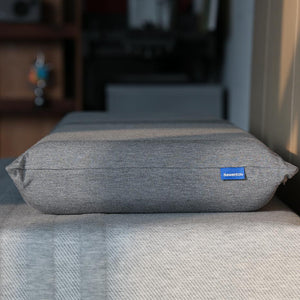
The right pillow keeps your head and neck aligned with your spine. Look for one with adjustable height to match your sleep position, plus breathable, cooling fabric to prevent night sweats.
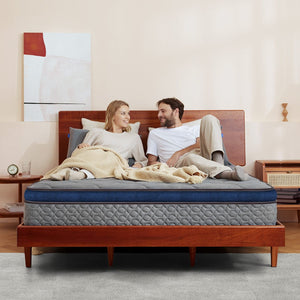
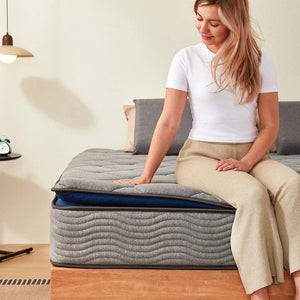
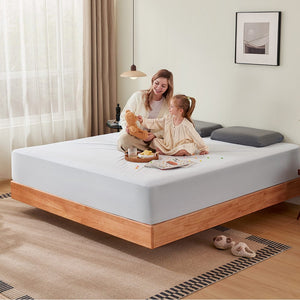
Your mattress should support your body's natural curves — with targeted firmness for your shoulders and hips, and extra reinforcement for your lower back. A breathable, antibacterial cover is a nice bonus for a cleaner sleep environment.
Pair these with a cool, dark, quiet room. Good bedding — like what you’d find from Newentor doesn't just feel nice — it helps you fall asleep faster and wake up pain‑free.


FAQs About Relaxation Tips for Sleep
Q: What is the most effective relaxation technique for sleep?
Progressive muscle relaxation (PMR) is one of the most researched and effective techniques. Studies show it significantly improves sleep quality, especially for people with insomnia.
Q: How long before bed should I start my relaxation routine?
Aim to start winding down about 30 to 90 minutes before bed. This gives your body and mind enough time to transition from "go mode" to "rest mode".
Q: Can deep breathing really help me fall asleep?
Absolutely. Deep breathing techniques like 4-7-8 breathing lower your heart rate and blood pressure, signaling to your body that it's time to relax.
Q: What if I try these relaxation tips for sleep and still can't fall asleep?
If you've been lying in bed for more than 20 minutes, get up and do something relaxing — like reading or gentle stretching — until you feel sleepy again. Don't force it.
Q: Is it okay to use my phone for guided meditation before bed?
It's better to use an audio-only device or set your phone to "do not disturb" with the screen off. The blue light from screens can interfere with your sleep, even if you're listening to something calming.
Bottom Lines
None of these relaxation tips for sleep will work if you don't actually try them. Pick a breathing exercise, sip some herbal tea, and give your body the signal to wind down.
But here's the thing: even the best relaxation routine falls flat if your bed isn't doing its part. An unsupportive pillow or a sagging mattress can undo all your hard work before you even close your eyes.
That's why the right bedding — like what Newentor offers — is the real foundation for rest. It turns relaxation tips for sleep into actual, deep, uninterrupted rest. So try the techniques, but don't ignore your bed. Tonight's the night — you've got this.

Leave a comment

625 views , 3 mins read